
Branded Winter Workwear: How to Keep Your Team Warm, Safe and Professional This Winter
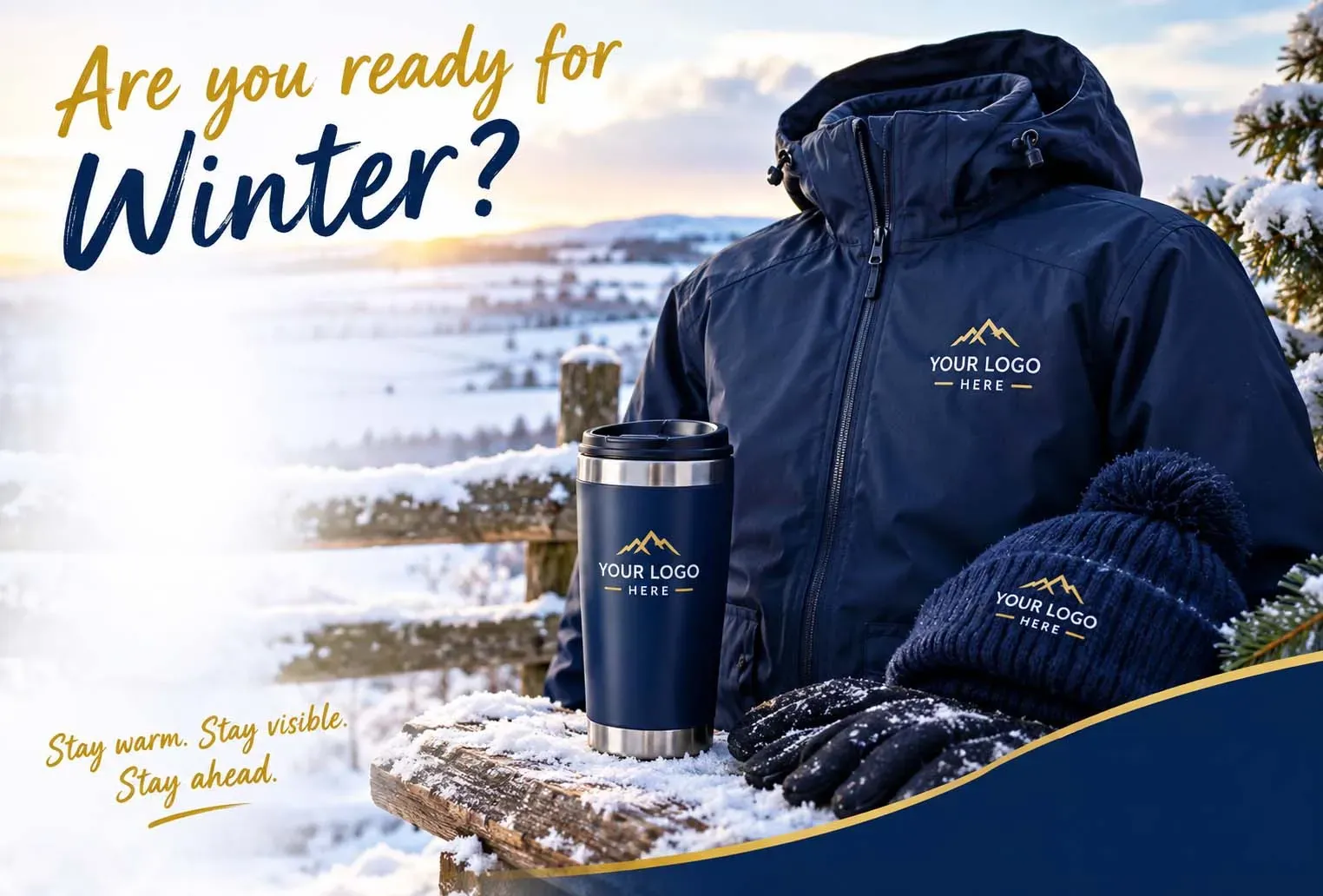
Winter in Britain can be unpredictable.
One day your team could be working in bright sunshine, and the next they could be dealing with driving rain, strong winds, freezing temperatures and much shorter daylight hours.
For businesses with employees working outdoors, travelling between sites or regularly meeting customers, winter creates more than just a weather problem. It can affect comfort, safety, morale, productivity and the way your business is perceived.
That is where the right branded winter workwear can make a real difference.
A good winter uniform should do more than carry your company logo. It should help your team deal with the conditions they actually work in, while making sure your business continues to look professional wherever your employees are seen.
And perhaps most importantly, winter workwear should be planned before the cold weather arrives, rather than ordered when everyone is already reaching for their old coat.
Why winter workwear matters to your business
It can be tempting to think of winter workwear as simply another business expense.
But the right clothing can serve several purposes at the same time.
It can help your employees stay comfortable. It can provide additional protection against cold and wet conditions. It can help maintain a consistent company image. And when it is branded, every jacket, gilet, fleece or coat can become another opportunity for your business to be seen.
For outdoor workers, weather conditions can also affect their ability to work safely. The Health and Safety Executive advises employers to consider appropriate protective equipment, warming facilities and rest arrangements when employees are working in cold environments.
That means winter clothing should not simply be chosen because it looks good.
It needs to be suitable for the job.
What should you look for in winter workwear?
There is no single winter garment that is right for every business.
A construction team working outside all day has different requirements from an engineer travelling between customer sites. A landscaping company will have different needs from a facilities management company or a team attending outdoor events.
Before choosing your winter workwear, think about four simple questions:
Where will your team be working?
How long will they be outside?
What weather conditions are they likely to experience?
Are there specific safety or visibility requirements?
Once you know the answers, you can start building a winter workwear system rather than simply buying everyone a coat.
Think in layers rather than one heavy coat
One of the most practical approaches to winter workwear is layering.
Instead of relying on one extremely heavy garment, your team can combine different layers depending on the weather and the work they are doing.
A typical system could include:
1. Base layer
This could be a T-shirt, polo shirt or thermal layer worn close to the body.
The purpose is to provide a comfortable foundation that can be worn underneath other garments.
2. Mid-layer
A fleece, sweatshirt, hoodie or softshell can provide additional warmth while still allowing freedom of movement.
This can be particularly useful during autumn and milder winter days when a heavy coat may not be necessary.
3. Outer layer
This is where a waterproof or weather-resistant jacket can provide protection from rain and wind.
Depending on the job, this could be a padded jacket, waterproof jacket, softshell or specialist high-visibility outerwear.
The advantage of layering is flexibility.
Your team can add or remove garments as conditions change without needing a completely different uniform for every weather situation.
Branded winter jackets can keep your business visible
Your company logo should not disappear simply because winter has arrived.
In fact, winter can be one of the most useful times of the year to keep your branding visible.
Think about how often your team is seen outside during the colder months.
They could be:
- Arriving at customers' premises
- Travelling between jobs
- Working on construction sites
- Visiting suppliers
- Walking through town
- Working outdoors
- Attending meetings
- Loading and unloading vehicles
- Representing your company at events
A branded winter jacket means your business identity travels with your team.
Instead of employees wearing a mixture of personal coats, your business can present a more consistent and professional appearance.
That consistency can be particularly valuable when your employees are the first point of contact between your company and a potential customer.
Waterproof workwear is about more than staying dry
British winter weather means rain needs to be considered when choosing outdoor workwear.
A garment may look suitable in a catalogue, but the important question is whether it is appropriate for the environment in which it will actually be worn.
For outdoor teams, consider factors such as:
- Water resistance or waterproofing
- Wind protection
- Breathability
- Insulation
- Ease of movement
- Durability
- Pockets and storage
- Fastenings
- Compatibility with other layers
- How the logo will be applied
The right combination will depend on the job.
Someone working outside for several hours may need a different solution from someone who only walks from a van to a customer's building.
Don't forget winter hi-vis workwear
For some businesses, visibility is a particularly important consideration during winter.
Shorter daylight hours, poor weather, rain, fog and darker working environments can all affect how easily people are seen.
The HSE advises that the selection of high-visibility clothing should take account of the working environment, lighting conditions and weather. The appropriate level of high-visibility clothing depends on the risks involved and the particular task.
This is why choosing a winter jacket simply because it has a bright colour is not enough.
If your employees require high-visibility PPE, make sure the garments selected are appropriate for the task and comply with the relevant requirements.
And remember that branded does not automatically mean compliant.
Your company logo should be added in a way that does not compromise the required performance or visibility of the garment.
Embroidery or print: which is better for winter clothing?
One question we are often asked is whether a company logo should be embroidered or printed onto winter workwear.
There isn't one answer for every garment.
Embroidery
Embroidery can create a smart, professional finish and works particularly well on garments such as:
- Fleece jackets
- Softshell jackets
- Gilets
- Sweatshirts
- Beanies
- Polo shirts
It can give your winter uniform a more premium appearance.
Printing
Printed logos can be useful where a larger or more detailed design is required.
Depending on the garment and material, different printing methods may be available.
The important thing is to consider the garment, logo, size, colours and intended use before deciding how your branding should be applied.
A good workwear supplier should be able to advise you rather than simply using the same decoration method on every garment.
Winter workwear can strengthen your professional image
Imagine two engineers arriving at a customer's premises.
One arrives wearing an old personal coat with no branding.
The other arrives wearing a clean, well-fitting branded jacket with the company logo clearly visible.
The service may be exactly the same.
But the presentation is different.
Your workwear forms part of your customer's experience of your business.
That is particularly important for companies where employees regularly visit customers at home or at their place of work.
A consistent uniform can help create a sense of professionalism before your employee has even introduced themselves.
It is not about making a garment look expensive.
It is about making sure your team looks like your team.
Winter workwear can support team identity
There is another benefit that can easily be overlooked.
Uniforms can help people feel that they belong to something.
When employees are provided with good-quality clothing that has been chosen specifically for their role, it can demonstrate that their comfort, safety and appearance have been considered.
And when everyone wears a consistent uniform, it can create a stronger sense of identity across the team.
This can be particularly useful for businesses with employees working across multiple sites.
A branded jacket can instantly identify who belongs to your company.
Don't leave your winter workwear until the last minute
This is one of the biggest mistakes businesses can make.
If you wait until the first really cold week of the year before reviewing your winter clothing, you could find yourself trying to organise:
- Sizes
- Quantities
- New starters
- Replacement garments
- Logo artwork
- Embroidery
- Printing
- Delivery deadlines
- PPE requirements
All at the same time.
Instead, review your workwear before winter properly arrives.
Ask your team what they already have.
Check what is worn out.
Identify missing sizes.
Look at whether your existing jackets are still suitable.
Then decide what needs replacing or adding.
This makes the process much easier and gives you time to choose the right garments rather than simply buying whatever is available at short notice.
What winter workwear does your team actually need?
A simple winter workwear checklist could include:
Branded polo shirts – useful as a base layer and for customer-facing work.
Fleeces – a practical mid-layer providing warmth without the bulk of a heavy coat.
Softshell jackets – useful for businesses looking for a smart outer layer that provides protection against changing weather.
Padded jackets – suitable where additional warmth is required.
Waterproof jackets – particularly useful for teams working outside in wet conditions.
Hi-vis jackets and outerwear – for roles where high visibility is required.
Gilets – useful where additional warmth is required without restricting arm movement.
Hoodies and sweatshirts – useful as casual or mid-layers, depending on the working environment.
Winter hats and beanies – practical additions that can also carry your branding.
The right combination depends on the work your team carries out.
Don't forget different body shapes and sizes
A common mistake when ordering company clothing is treating everyone as though the same garment will fit everyone in the same way.
It won't.
Men's and women's garments can have different cuts, and employees have different body shapes and preferences.
When ordering winter clothing, consider:
- Men's and women's fits where available
- Full size ranges
- Whether layers will be worn underneath
- Sleeve length
- Garment length
- Freedom of movement
- How the garment feels when working
A jacket that looks good on a hanger isn't necessarily the right jacket for someone wearing it for eight hours.
Comfort matters.
If the garment is uncomfortable, employees may simply leave it in the van or locker.
Is branded winter workwear an expense or an investment?
This is perhaps the biggest question for a business owner.
The answer depends on how you look at it.
A winter jacket bought purely as clothing is an expense.
But a well-chosen branded winter uniform can perform several jobs at once.
It can provide warmth.
It can support your company's professional image.
It can help identify your employees.
It can reinforce your brand.
It can provide an opportunity for visibility outside your workplace.
And, where appropriate, it can form part of a wider approach to workplace safety.
That makes the decision about more than simply asking, “How much does a jacket cost?”
A better question is:
“What does this garment need to do for my business and my team?”
Your winter workwear is part of your marketing
We often think about marketing as something that happens online.
- Websites.
- Social media.
- Email campaigns.
- Advertising.
But your employees can also become part of your marketing simply by going about their day.
Every branded jacket worn to a customer, every branded fleece worn on a site and every branded hat worn while travelling creates another opportunity for your company to be recognised.
You don't know who is going to see your logo.
It could be a potential customer walking past.
Another business owner.
Someone who has been recommended to you.
Or someone who needs your services six months from now.
That is one of the reasons I believe good workwear should do more than look smart.
It should work for your business.
How to choose branded winter workwear for your business
Before placing your next order, consider these seven questions:
1. What conditions will the team work in?
Cold, rain, wind, darkness and indoor/outdoor changes all need to be considered.
2. How long will employees be outside?
Occasional outdoor exposure requires a different approach from all-day outdoor work.
3. Does the job require high visibility?
If so, identify the appropriate requirements before choosing garments.
4. Will employees need layers?
Think about how the garments will work together.
5. How will your logo be applied?
Consider embroidery, printing, logo size and garment material.
6. Do you need men's and women's fits?
Good fit can make a significant difference to comfort and how professional the uniform looks.
7. Can you order before winter arrives?
Planning ahead gives you more time to consider your options and avoid a last-minute scramble.
Make this winter the year your workwear works harder
Winter workwear doesn't need to be complicated.
It simply needs to be right for the people wearing it and the work they are doing.
The right combination of branded layers can help your team stay warm and comfortable while maintaining a consistent professional appearance.
And for businesses whose employees spend time outdoors, suitable clothing can form an important part of managing the challenges created by colder weather. The HSE specifically recommends considering appropriate protective clothing and other measures for people working in cold environments.
At Summers Print & Promotions, I help businesses look at their branded clothing as more than just another item on an order form.
Whether you need branded jackets for a small team, winter workwear for employees working outdoors, hi-vis clothing, fleeces, hats or a complete winter uniform, I can help you look at what will work for your business.
Because your workwear should do more than keep your team warm.
It should help keep them seen, help them feel part of the team and help your business get noticed.
If you are thinking about replacing or updating your winter workwear, now is a good time to start.
Get in touch for a friendly, no-obligation conversation about what your team needs this winter.
What is the best winter workwear for outdoor workers in the UK?
There isn't one single item of winter workwear that is best for every outdoor worker. The right choice depends on the type of work, how long employees spend outside, the weather conditions they experience and whether there are specific safety or visibility requirements.
For many UK businesses, a layered approach is practical. A base layer can be combined with a fleece, sweatshirt or softshell as a mid-layer, followed by a suitable outer jacket for protection from rain and wind. This allows employees to adjust what they wear as conditions change.
For outdoor workers, waterproof protection can be particularly important during periods of heavy rain. Where employees work around vehicles, construction sites, roads or other hazards, high-visibility workwear may also be required. The HSE advises employers to consider the working environment, lighting and adverse weather when selecting high-visibility clothing.
Businesses should also consider movement, comfort, garment durability, sizing and whether employees need to wear other PPE at the same time.
The most effective winter uniform is therefore not necessarily the thickest or most expensive option. It is the combination of garments that suits the actual job.
Before ordering, consider where your team works, how long they remain outdoors and what conditions they are likely to encounter. That information will make it much easier to select appropriate winter workwear.
Can you put a company logo on winter jackets and waterproof workwear?
Yes, many winter jackets, softshells, fleeces, gilets and other outerwear can be branded with a company logo. However, the best decoration method depends on the garment, fabric, logo design and intended use.
Embroidery is a popular choice for many jackets, fleeces, gilets and softshell garments because it creates a professional and durable-looking finish. It can work particularly well for relatively simple company logos.
Printing can be useful where a larger logo, more colours or a particular visual effect is required. The suitability of printing will depend on the garment material and construction.
It is important not to assume that every winter garment can be decorated in exactly the same way. Waterproof fabrics, padded jackets, high-visibility garments and specialist materials can have different requirements.
If you are buying workwear for a safety-critical environment, the branding should also be considered alongside the garment's required performance and certification. A logo should never be added in a way that compromises the required visibility or protective characteristics of specialist workwear.
A good supplier should look at your logo and chosen garment together before recommending embroidery or print.
The aim is to create winter workwear that looks professional, lasts well and remains appropriate for the job your employees are doing.
Is high-visibility winter workwear necessary for outdoor workers?
High-visibility winter workwear can be important for employees working in environments where being seen is part of managing workplace risk, but it is not automatically required for every outdoor worker.
The requirement depends on the job, workplace, hazards and risk assessment.
For example, people working around moving vehicles, construction sites, highways or other environments where visibility is critical may have specific high-visibility clothing requirements.
Winter can make visibility particularly important because working hours may include periods of darkness, poor weather, rain, fog or reduced natural light. The HSE states that high-visibility clothing should be selected with factors such as ambient and artificial lighting and adverse conditions including fog and snow in mind.
This means businesses should not simply choose a bright-coloured jacket and assume it provides the necessary protection.
If high-visibility clothing is required, employers should identify the appropriate specification for the task and workplace and ensure the garment is suitable.
Branded high-visibility workwear can still provide a professional company image, but branding should be applied appropriately and must not undermine the garment's required performance.
If you are unsure about the specific PPE requirements for your workplace, obtain suitable health and safety advice rather than relying solely on a clothing supplier.
When should a business order winter workwear?
Ideally, businesses should review and order winter workwear before the weather becomes consistently cold and wet.
Waiting until the first major cold spell can create unnecessary pressure. You may suddenly need to check everyone's sizes, identify replacement garments, approve artwork, arrange embroidery or printing and meet a particular delivery deadline.
Planning earlier gives you time to review what employees already have and decide what actually needs replacing.
Start by checking the condition of existing jackets, fleeces and other winter garments. Ask whether employees have suitable sizes and whether the clothing is still appropriate for their roles.
Then consider whether your business has taken on new employees or changed the way particular teams work.
It is also worth thinking about seasonal changes in working hours. Shorter daylight hours can make visibility more important for some outdoor teams.
Ordering early does not necessarily mean buying everything at once. A business can build a practical winter workwear plan and prioritise the garments employees genuinely need.
For many companies, the best time to start thinking about winter clothing is during late summer or early autumn, rather than waiting until everyone is already asking where their winter jacket is.
How can winter workwear improve a company's professional image?
Your employees are often one of the most visible parts of your business.
When they visit a customer's premises, attend a construction site, travel between jobs or work in public, the clothing they wear becomes part of how your company is presented.
Branded winter workwear can create consistency by replacing a collection of personal coats and jackets with garments that clearly identify the business.
This can be particularly useful for service businesses where employees regularly meet customers face to face.
A well-designed uniform can communicate that the business pays attention to detail and takes its presentation seriously. It can also make employees easier for customers to identify.
The key is not simply having a logo on a garment.
The clothing needs to be clean, comfortable, well-fitting and appropriate for the work.
Colours can also contribute to brand recognition. If your business has established brand colours, using complementary garments can create a more consistent visual identity.
Winter provides a particularly useful opportunity because outerwear is highly visible.
A branded jacket can be worn over the normal uniform, meaning the company's identity remains visible when temperatures drop.
Ultimately, good winter workwear should combine practicality with presentation rather than treating branding as an afterthought.
How much does branded winter workwear cost?
The cost of branded winter workwear varies considerably because there are several factors involved.
The type of garment is one of the biggest influences. A lightweight softshell will generally be a different investment from a heavily insulated or specialist waterproof jacket.
The quantity ordered can also affect the price, particularly where suppliers offer volume pricing.
Then there is the branding itself. Embroidery and printing costs can depend on the size and complexity of the logo, the number of positions being branded and the number of garments.
Other factors can include garment specification, size, colour, delivery requirements and whether the clothing is standard workwear or specialist PPE.
For this reason, it is difficult to give a single price that applies to every business.
Instead of choosing purely on the lowest unit price, consider what the garment needs to achieve. A cheaper jacket may not represent good value if employees find it uncomfortable or unsuitable and stop wearing it.
Equally, the most expensive garment isn't automatically the right choice.
A sensible approach is to establish your budget, identify the working conditions, decide which garments are genuinely required and then compare suitable options.
That way, you are comparing like with like rather than simply comparing prices.
Can branded winter workwear help with employee morale?
Good workwear can contribute to employee morale, although it should not be viewed as a substitute for good management, working conditions or communication.
When an employer provides suitable clothing for the job, it can demonstrate that employees' comfort and practical needs have been considered.
This can be particularly noticeable during winter.
Imagine asking employees to work outside in freezing temperatures while expecting them to provide their own suitable clothing. Compare that with providing a consistent range of appropriate winter garments designed for the work they actually perform.
The second approach can send a very different message.
Branded clothing can also help create a sense of team identity. When employees wear the same uniform, it can reinforce the idea that they are part of the same organisation.
There is also a practical benefit. Employees don't have to worry about which personal jacket is suitable for representing the company when visiting customers.
However, comfort remains important. If workwear is poorly fitted, too restrictive, too heavy or unsuitable for the job, employees may be reluctant to wear it.
The best winter uniform therefore starts with the wearer.
Ask what your team needs, listen to their feedback and choose clothing that is practical for the work.
